

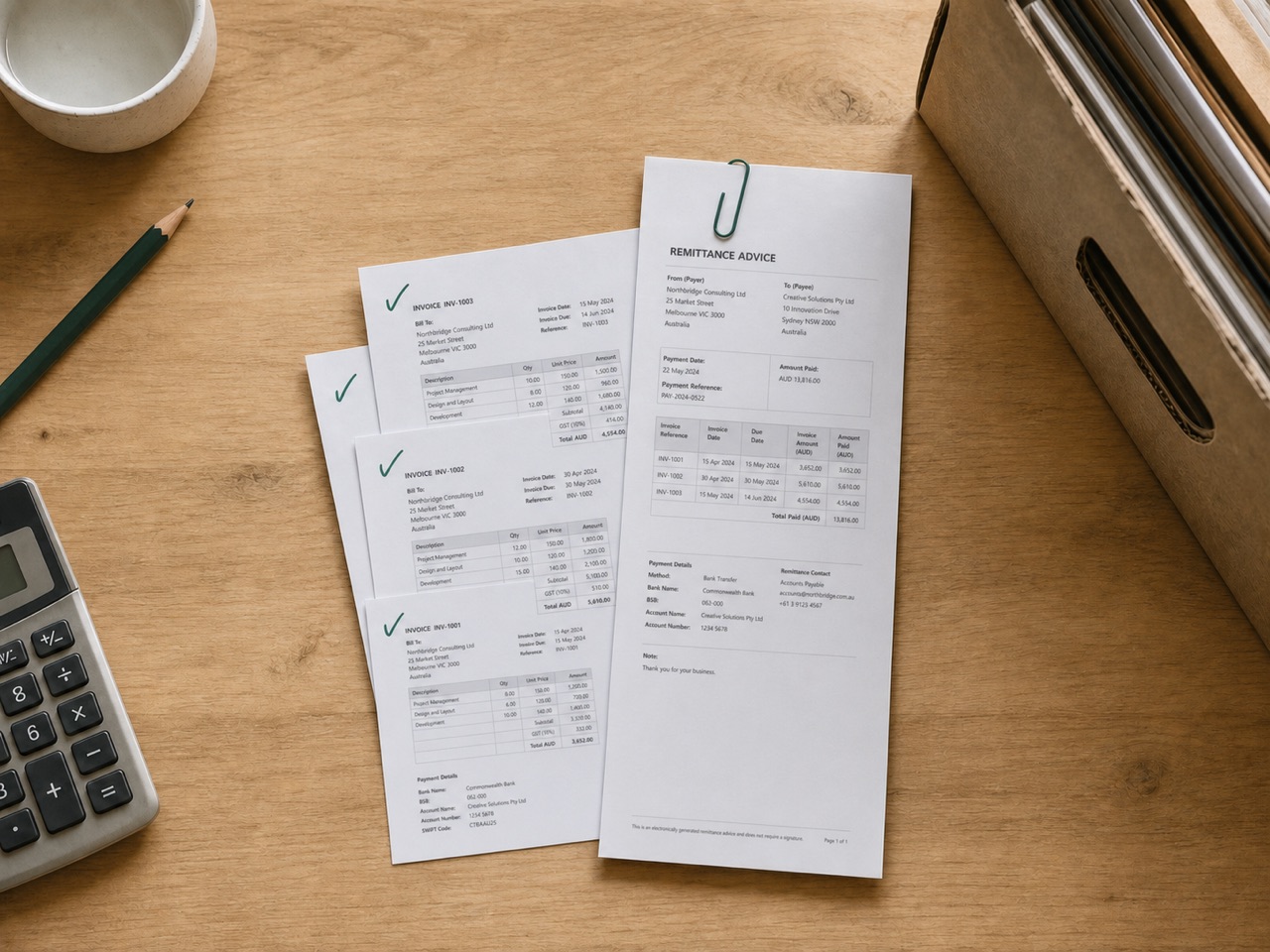
When a customer pays five invoices with one bank transfer, the payment itself tells you almost nothing: one amount, one reference, five open invoices somewhere in your ledger. The document that decodes it is the remittance advice, the note that says which invoices this payment covers.
In most small businesses, remittance advices get skimmed and filed, or skipped entirely. Then, at reconciliation time, someone reverse-engineers the match: which combination of open invoices adds up to €4,712.50? It's tedious, error-prone detective work that the remittance advice had already solved — and it's the same work a supplier statement forces on you a month later.
The fix is treating reference numbers as first-class data. When Cribble reads a remittance advice, it extracts the invoice numbers it names and looks them up in your account. Found? Linked, in both directions: open the invoice and you'll see the remittance that paid it. Not found? The reference is shown as unmatched, honestly, and linked automatically if that invoice arrives later.
The same logic reassembles the rest of the paper trail: packing slips link to their purchase orders, credit memos to the invoices they correct. None of it requires anyone to remember to cross-reference anything; the documents already reference each other, and software just has to read them.