
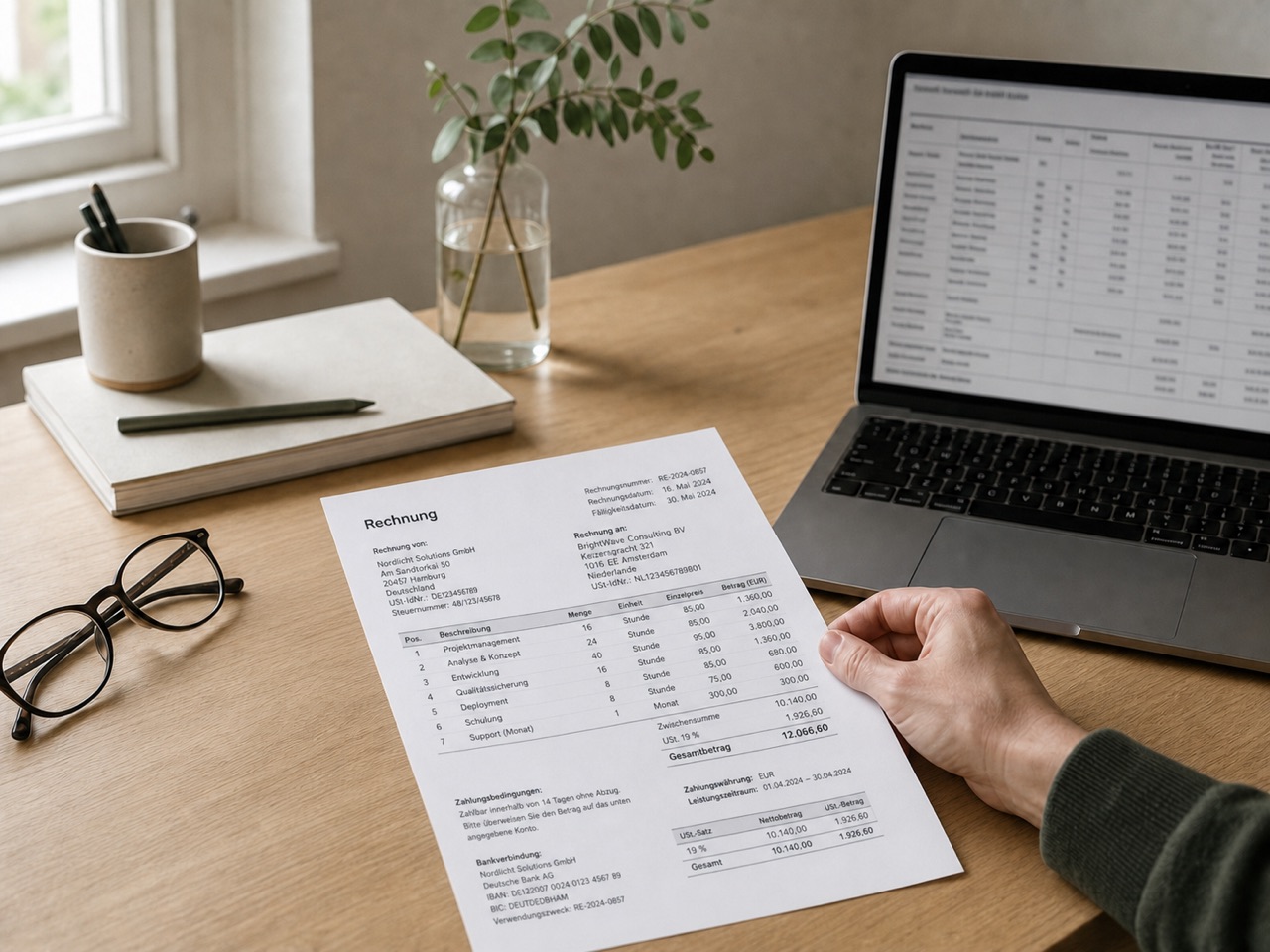
Since January 2025, every business in Germany must be able to receive structured e-invoices (XRechnung or Factur-X) from other businesses. Not issue them yet: receive them. That obligation is already in force, and it's the one most small businesses have quietly ignored.
The rest of the timeline phases in: from 2027, businesses above €800k turnover must issue e-invoices for domestic B2B transactions, and from 2028 that extends to everyone. Paper and plain-PDF invoices lose their status as the default; structured data becomes the legal document — which also has to be retained for ten years in Germany.
What does 'able to receive' mean in practice? An e-invoice is XML: machine-readable, not human-readable. If a supplier sends you an XRechnung and your process is 'print it and type it in', you can't process the legal document you've received. You need something that can parse the XML and show you the contents — and it's worth knowing which format is which, because a Factur-X file at MINIMUM profile carries almost no structured data.
This is why Cribble parses Factur-X, XRechnung and Peppol formats directly, before any AI or OCR is involved. The XML is the source of truth, so we read it exactly: every field with 100% confidence. And because the transition will be messy for years, the same inbox handles the PDFs and paper that everyone else still sends.
If you trade in Germany or with German businesses, the practical move is simple: make sure whatever handles your incoming invoices can read the structured formats. That's table stakes now, not a future problem.